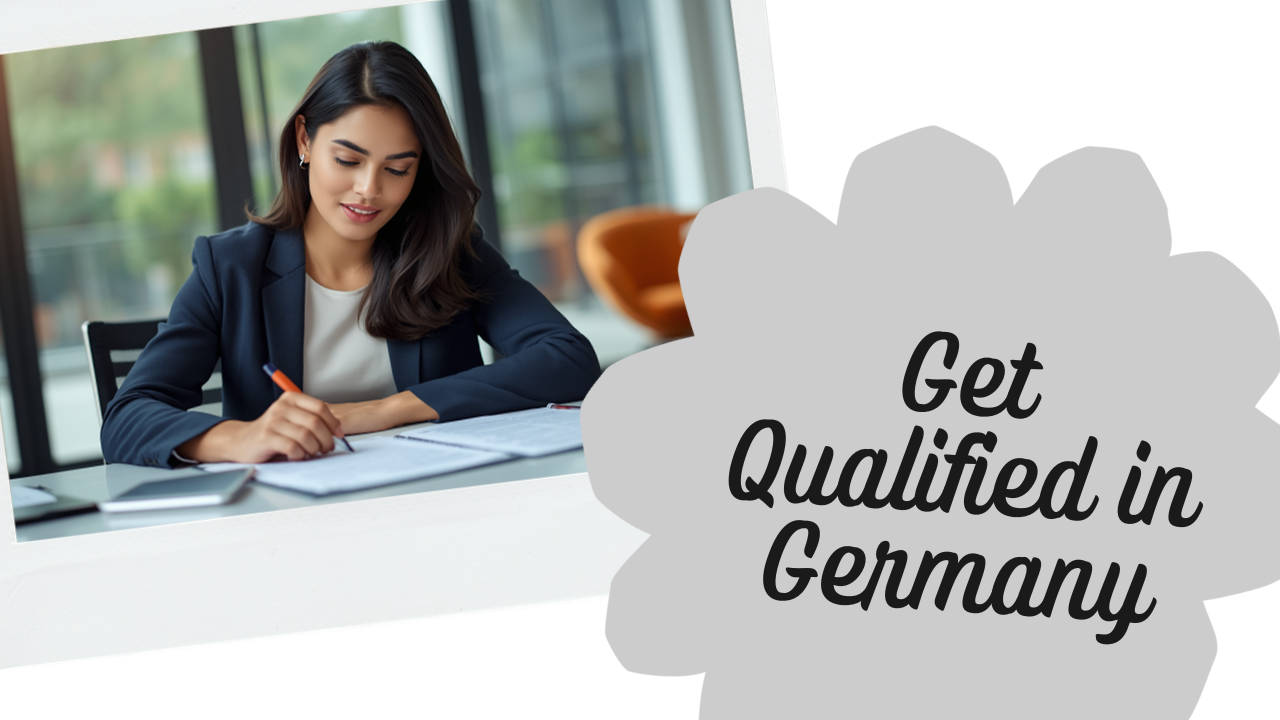
To work in many German professions, your foreign qualification needs to be “recognised” — officially compared to the equivalent German qualification. This sounds bureaucratic, but it is a well-defined process, and recent reforms have made it considerably faster and more flexible.
What recognition (Anerkennung) means
Recognition confirms that your training or degree is equivalent to the German standard for your profession. For regulated professions (such as many healthcare roles), recognition is mandatory before you can work. For non-regulated professions (many skilled trades and technical jobs), recognition is not always legally required to work, but it strengthens your visa application and your salary.
The official, government-run starting point is the portal anerkennung-in-deutschland.de, which explains, profession by profession, which authority is responsible and which documents you need.
The standard process — in short
- Find the right authority for your profession (the portal’s “Recognition Finder” helps).
- Gather your documents — typically your qualification certificate, proof of work experience, and certified translations.
- Submit your application to the responsible body.
- Receive the result: full recognition, or a notice of the difference, which can often be closed through a short adaptation course or exam.
Done from abroad, this used to mean months of waiting before you could even arrive. That has changed.
The Recognition Partnership — work first, finish recognition in Germany
Under the reformed Skilled Immigration Act, the Recognition Partnership (§16d (3) of the Residence Act) lets you enter Germany and start working in qualified employment while your recognition is still in progress, instead of waiting abroad until it is complete.
- You and your employer sign a written recognition partnership agreement, committing to complete the recognition procedure after you arrive (the employer also gives you time for any required training).
- The residence permit is issued for one year and can be renewed yearly, up to a maximum of three years.
- You generally need a qualification recognised by the country where you earned it (a professional qualification of at least two years of training, or a higher-education degree) and German at A2 or above.
For many skilled workers, this is the single most important change in recent years: it removes the long wait and lets you build your life in Germany sooner.
How NextMittelstand helps
Recognition is exactly the kind of step where good guidance saves months. We help candidates understand their pathway, prepare the right documents, and — where it fits — set up a recognition partnership with a German employer. It is fair, legal, and free of charge for candidates. Start your application and we’ll review your qualifications and explain your best route.
Sources: Make it in Germany (Recognition partnership; Skilled Immigration Act), anerkennung-in-deutschland.de.